
OUR SIGNATURE WORK
Intergenerational Programs
Come together, celebrate each other, and build lasting connections.
Young and old coming together to learn from each other. Connecting schools, corporations and retirement communities, fostering understanding, empathy and wellbeing across generations.
Moments That Bring Generations Together
Take a closer look at our intergenerational program in action, creating meaningful relationships, sharing experiences and building stronger connections between younger and older generations.
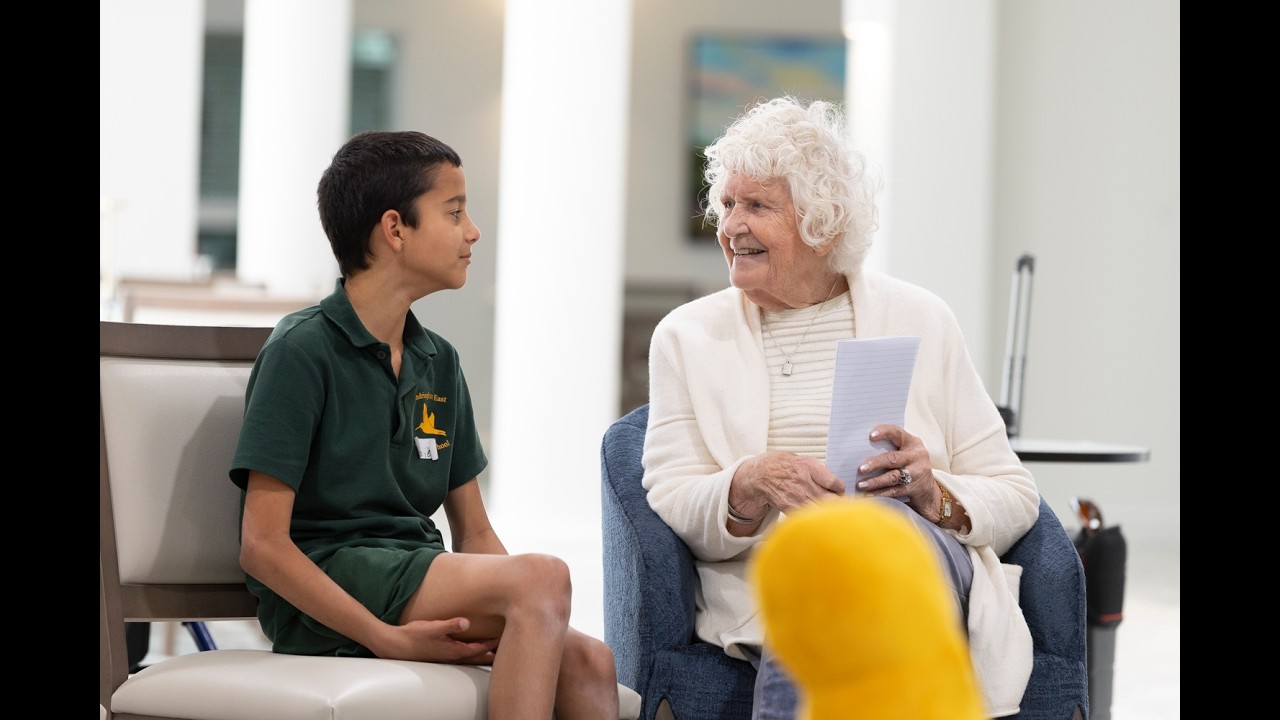
Creating Connections Across Generations
Discover how bringing younger and older generations together can create opportunities to share experiences, develop relationships and build meaningful connections.
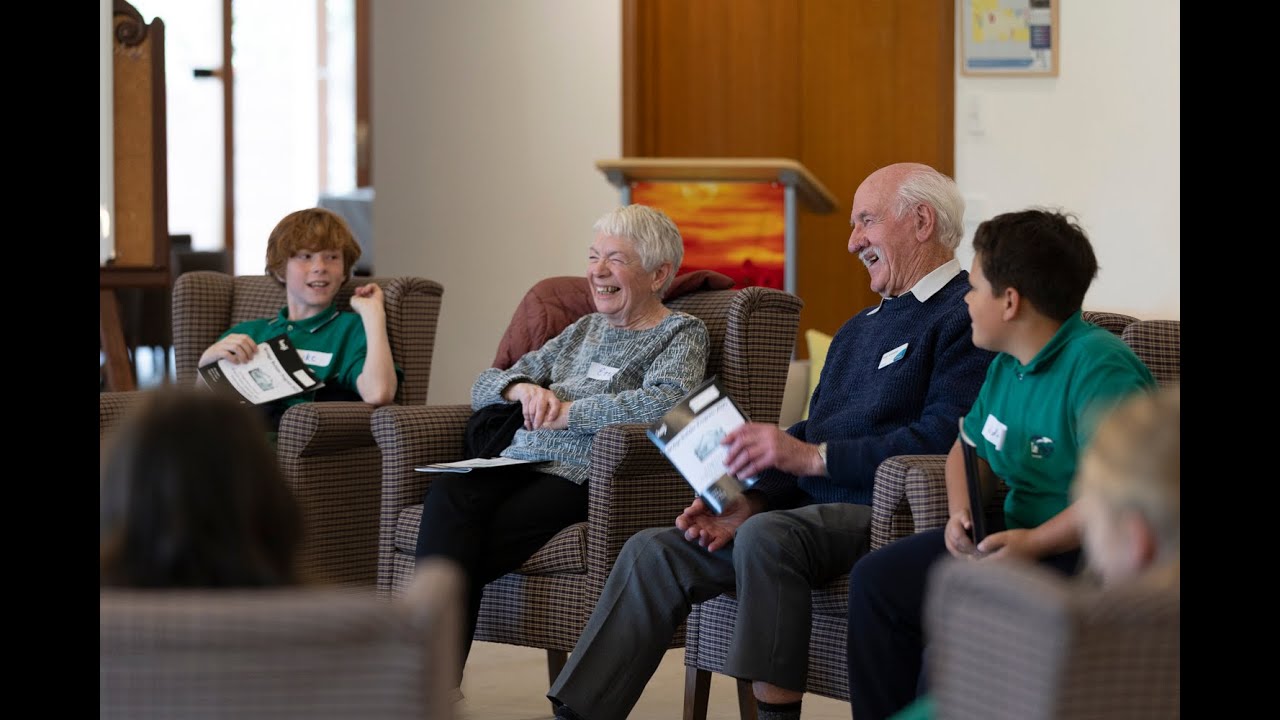
Building Bridges Through Shared Experiences
Explore the value of intergenerational connection in encouraging understanding, nurturing a sense of belonging and strengthening relationships across different stages of life.
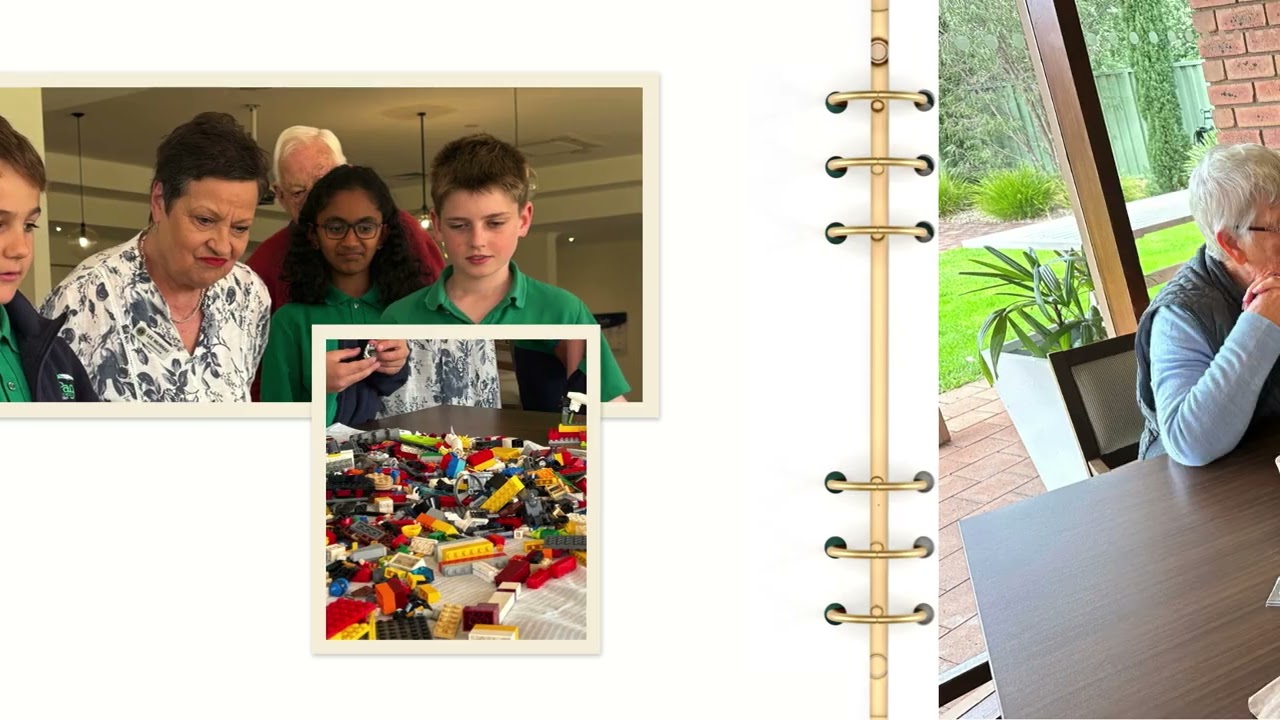
Learning and Growing Together
Discover how shared experiences can create opportunities for people of different generations to connect, learn from one another and develop a deeper appreciation for each other's perspectives.
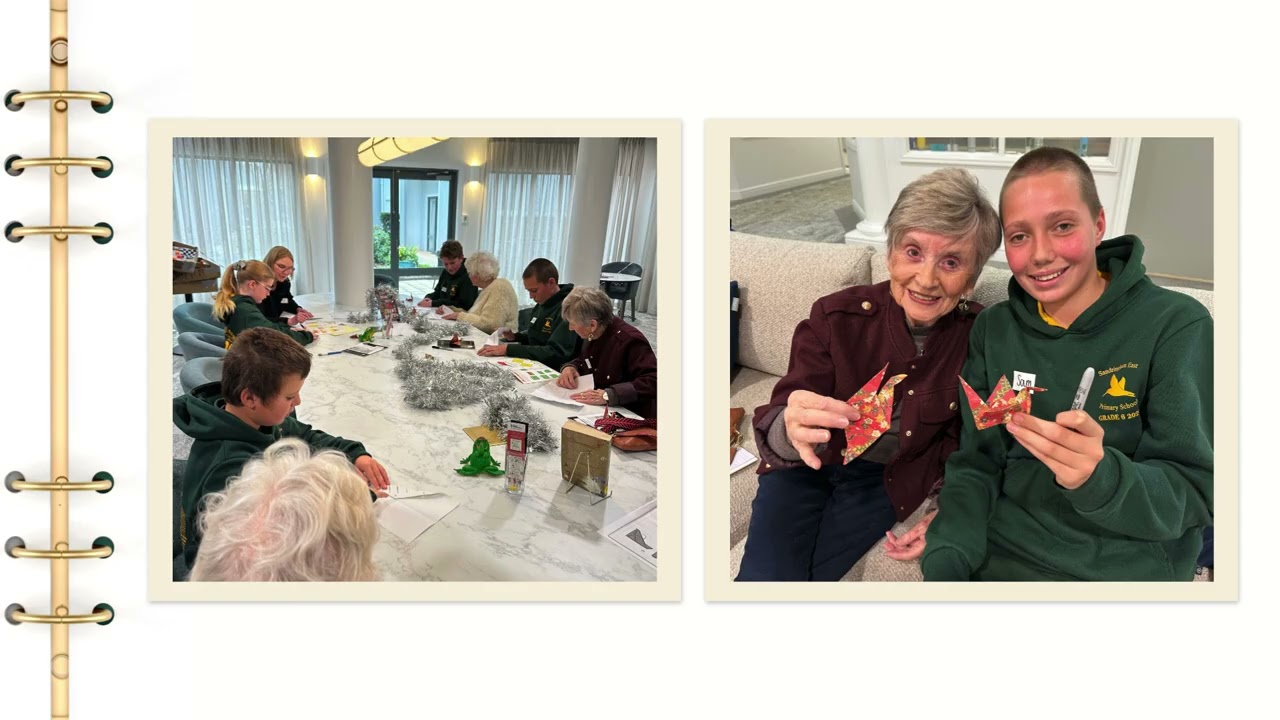
The Power of Intergenerational Connection
Explore how opportunities to connect across generations can nurture relationships, foster mutual understanding and support a greater sense of connection and belonging within the community.
How it works
Our intergenerational program brings children and older adults together to build empathy, wellbeing and stronger community connections. In a warm, inclusive setting, generations meet as equals to share stories, creativity and care.
Through guided activities, sharing thoughts and feelings, creative projects and more, participants form meaningful connections that reduce loneliness and support emotional wellbeing. Children build empathy, confidence and communication skills, while older adults enjoy companionship, purpose and joy.
Students learn nature connection, sensory and creative practices that calm the mind and ground the body, then put them to work alongside residents of a nearby aged care or retirement community. Teachers tell us the best part is how little they have to do: we bring the plan, the materials and the facilitation.
What's Available
What changes
Products & Resources
Reflection Boxes, sensory sets, chimes and conversation cards you can use between sessions or keep going on your own.
Visit the shopResearch
The evidence behind these sessions, on connection to nature and connection to each other.
Read the research“Wayne and Cath made it so easy for me as the Teacher, I just turned up and it was all done for me.”
“It was like I was cooking with my Nan, I've never been able to do that.”
“An absolute delight! Amazing! It has been really touching and heartwarming! An honour, thank you!”
“I've made new friends.”
Benefits for young people
Our program helps children build empathy, confidence, leadership and communication skills. Through meaningful interactions with older adults, students gain insight into diverse life experiences and develop genuine respect for previous generations. Shared conversations, activities and storytelling support social development and broaden their understanding of history, culture and community.
Benefits for older people
The intergenerational program builds connections, brings joy and a sense of purpose. The sessions help reduce loneliness, issues linked to depression, dementia, heart disease, stroke and declining quality of life among older Australians. By forming real relationships, residents experience greater connection with both peers and students, strengthening emotional wellbeing for all involved.
Who we are
Because better connection to each other leads to better health and happiness.
We're a team of passionate educators and wellbeing providers with over 30 years of experience across Melbourne. We love working with people in the community, creating programs that bring people of all ages together in a supportive, inclusive and nurturing environment.
Our intergenerational programs are designed for schools, aged care settings, NDIS participants and corporate workplaces. Each experience encourages connection, creativity and calm.
Watch
Our intergenerational program, as featured on Channel 9 Australia
Watch the videoTake a look at our intergenerational program at work, making connections, creating relationships, building bridges
Watch the videoBringing generations together enhances wellbeing, strengthens community and reminds us of shared values
Watch the video
Bridge Builder Connections · Intergenerational Program
Curriculum alignment for Australian schools
How six to eight facilitated sessions between a Year 5 class and aged care residents connect to the Australian Curriculum v9.0, and to the framework each state and territory uses. Years 5–6 · Stage 3 · Level 5–6.
National alignment: Australian Curriculum v9.0, Health and Physical Education, Years 5–6
| Code | Students learn to… | Where it appears in the program | Fit |
|---|---|---|---|
| AC9HP6P01 | Explain how people and places influence identity and how to build positive self-identities. | Paired prompts about memories and life stories; hearing how places and people shaped each resident. | Strong |
| AC9HP6P04 | Describe and show how respect and empathy can be expressed to positively influence relationships. | Sustained pairs across sessions; students recognise residents, remember their stories and respond with care. | Strong |
| AC9HP6P05 | Describe and use strategies to value diversity in their communities. | Pairs form by choice, not facilitator direction; residents include people of varied backgrounds and abilities, including dementia, with adaptations. | Strong |
| AC9HP6P06 | Apply strategies to manage emotions and analyse how emotional responses affect interactions. | Calming introductory activity, quiet reflection, and nature and sensory practices before paired work. | Strong |
| AC9HP6P10 | Analyse how behaviours influence the health, safety, relationships and wellbeing of individuals and communities. | Whole-group sharing and closing reflection on connection, loneliness and wellbeing. | Moderate |
| AC9HP6M09 | Take part positively in groups by contributing, encouraging others and negotiating roles. | Shared achievable task, such as building a bridge with limited resources. | Strong |
| AC9HP6M05 | Take part in physical activity in natural and outdoor settings and examine what supports participation. | Only when sessions include outdoor, planting or gentle movement activities. | Optional |
Session by session
| Session step | What happens | Curriculum links |
|---|---|---|
| 1. Arrival and settling | Circle, introductions, purpose of the program. | AC9HP6P04, AC9HP6P06 |
| 2. Introductory activity | A short guided activity to slow down and arrive together, then self-chosen pairs. | AC9HP6P06, AC9HP6P05 |
| 3. Paired activity | Prompting questions about focus, memories and reflection. | AC9HP6P01, AC9HP6P04 |
| 4. Shared activity | Simple collaborative task designed to prompt conversation without pressure. | AC9HP6M09, AC9HP6P05 |
| 5. Conversation support | Facilitators guide each pair with prompts and pacing. | AC9HP6P04, AC9HP6P06 |
| 6. Closing and transition | Group reflection; acknowledging each person’s skills. | AC9HP6P10, AC9HP6P01 |
State and Territory view
Every jurisdiction builds on the Australian Curriculum in its own way, so the same program is referenced slightly differently depending on the school’s location.
| State | Curriculum areas | Curriculum framework | Intergenerational Program links |
|---|---|---|---|
| VIC | Personal and Social Capability, English, Humanities, Health and Physical Education, Ethical and Intercultural Capabilities, Critical and Creative Thinking | Victorian Curriculum F–10 Version 2.0. Health and Physical Education: Personal, Social and Community Health – Health Education. | Supports empathy, social skills, storytelling, community contribution, history, wellbeing and creativity. |
| NSW | Personal and Social Capability, HSIE and Civics and Citizenship, English, PDHPE, Ethical Understanding | NSW Curriculum: PDHPE K–6 Syllabus (2024), Stage 3. Also see NESA. | Supports empathy, social skills, civic understanding, storytelling, wellbeing and collaboration. |
| QLD | Personal and Social Capability, Health and Physical Education, Humanities, English, Ethical and Intercultural Capabilities | QCAA: Australian Curriculum v9.0. Uses the AC9HP6 codes listed above. | Supports wellbeing, social skills, ethical understanding, critical thinking, storytelling and community history. |
| SA | Personal and Social Capability, Community Engagement, Humanities, English, Health and Wellbeing | South Australian Curriculum | Supports community engagement, empathy, social development, wellbeing and reflective learning. |
| WA | Personal and Social Capability, Humanities, The Arts, English, Health and Physical Education, Critical and Creative Thinking | SCSA: Western Australian Curriculum K–10 Outline | Supports empathy, wellbeing, creative collaboration, social skills and historical understanding. |
| TAS | Community Service Learning, Health, Humanities, English, Personal and Social Capability | Tasmanian Department for Education, Children and Young People: Curriculum. Prep to Year 10 uses Australian Curriculum v9.0, so the AC9HP6 codes listed above apply. | Supports community service, empathy, social connection, reflective learning and storytelling. |
| ACT | Australian Curriculum general capabilities (Personal and Social, Ethical, Intercultural, Critical and Creative Thinking), English, Humanities, Health and Physical Education | ACT Education Directorate: Curriculum and Academic Reporting Policy. Kindergarten to Year 10 uses Australian Curriculum v9.0, so the AC9HP6 codes listed above apply. | Supports empathy, social skills, community participation, reflective thinking and storytelling. |
| NT | Australian Curriculum general capabilities plus local priorities (Personal and Social, Ethical, Intercultural, Critical and Creative Thinking), Health, Humanities, English | NT Curriculum: Australian Curriculum v9.0. Uses the AC9HP6 codes listed above. | Supports empathy, social skills, cultural understanding, community engagement and wellbeing. |
Beyond Health and Physical Education. The program also supports the Personal and Social, Ethical Understanding and Intercultural Understanding Capabilities; English (oral storytelling and listening); The Arts; Technologies (the shared bridge task); and HASS (oral-history style inquiry).
Australian Curriculum codes are from ACARA’s published v9.0 sequence. Sources: Australian Curriculum v9.0 © ACARA, CC BY 4.0, via QCAA’s sequence of content descriptions; VCAA, NESA, Queensland Department of Education, ACARA implementation pages.
The Intergenerational Program
Frequently Asked Questions
Meaningful connections take time. Discover how our program brings young people and older adults together through shared experiences, thoughtful conversations and relationships that grow over time.
1. What does the Intergenerational Program involve?
Our program is a structured, small-group experience that brings primary or secondary school students together with aged care residents for facilitated sessions held at the aged care home and, where appropriate, at the school.
Each program typically runs over six to eight sessions. Every session has a clear purpose, a planned sequence of activities and a consistent structure that helps participants know what to expect.
Activities may include:
- Guided, hands-on experiences.
- Storytelling and memory prompts.
- Collaborative tasks such as making, planting, arranging or recording stories.
- Quiet reflection and conversation supported by prompts.
Groups are intentionally kept small, usually one or two students with one or two residents. Trained program leaders guide interactions, pace conversations and support participants who need assistance.
Groups also come together to share what they have learned about a person, a topic or an activity.
This is not a visit or a performance. It is a program built around continuity, where relationships can develop through shared experiences over time.
Through our experience, Grade 5 has been an optimal age group for participation. Students can carry their developing skills, personal growth and leadership into Grade 6.
2. What actually happens in the program?
Each session follows a familiar rhythm. This consistent structure helps participants settle in, feel comfortable and engage at their own pace.
- Arrival and settling Students and residents gather, usually in a circle. Wayne and Catherine introduce themselves, and Wayne explains the purpose and intention of the program. Tangles the octopus is introduced to the group.
- Introductory activity A short, guided activity helps everyone slow down and arrive in the moment together. Participants then pair up naturally; facilitators do not determine the pairs.
- Paired activity Participants explore prompting questions that encourage curiosity, memories and reflection. These prompts help students ask questions and allow everyone to share stories at a comfortable pace.
- Shared activity Pairs work together on a simple, achievable task designed to encourage conversation without pressure, such as assembling a bridge with limited resources.
- Conversation support Facilitators support each pair with guidance, encouragement and prompts when needed.
- Closing and transition Everyone reflects on what they have learned and has an opportunity to acknowledge and celebrate individual participants' skills and contributions.
Connection grows over time. As familiarity develops, students may begin to recognise residents and remember their stories. Residents may show greater engagement, anticipation and willingness to participate as they become familiar with the sessions.
3. How are students and residents selected?
Participants may be selected purposefully or randomly. Our experience is that both approaches can work. Selection is made in collaboration with the people who know the students and residents well.
Students
Teachers or wellbeing staff may consider students who:
- Volunteer to participate.
- May benefit from encouragement or a positive opportunity.
- Would benefit from learning beyond traditional classroom settings.
- Show empathy, curiosity or quiet leadership.
- Engage well in relational or hands-on activities, including students who may find conventional learning environments challenging.
Students are prepared for the aged care environment, including respectful communication with older adults and awareness of experiences such as memory loss or limited mobility.
Residents
Aged care staff help identify residents who may enjoy one-to-one or small-group interaction, respond positively to creative activities, or benefit from structured social engagement.
Residents living with dementia may be included where appropriate, with adaptations that make activities achievable, comfortable and flexible.
Participation is voluntary and flexible. No resident is required to perform or carry a conversation. Everyone is supported to engage and respond at their own pace.
4. How is this program different from other intergenerational programs?
Some intergenerational programs focus on one-off visits, performances or loosely structured activities. Our program takes a different approach, emphasising continuity, thoughtful facilitation and meaningful participation.
01. Continuity, not novelty
Participants return over multiple sessions. As familiarity grows, recognition can replace awkwardness and trust can develop over time.
02. Active facilitation, not chance
Facilitators guide interactions, support communication, manage pacing and respond when someone needs additional encouragement or space.
03. Inclusion beyond conventional group settings
Activities are designed to support quieter participants and people who may feel less comfortable in large or noisy groups.
04. Shared experiences without conversational pressure
Hands-on materials and activities give participants something meaningful to do together. Conversation can develop naturally, without pressure to keep talking. Introductory prompts also help participants reconnect at each session.
05. Dignity, not performance
There are no performances, no showcasing and no expectation of a particular outcome. The value lies in shared moments and the relationships that may grow through repeated experiences.
5. What are the benefits for participants and the wider community?
When generations have opportunities to connect, they can learn from one another, feel more connected to their community and discover new ways to participate and contribute.
Benefits for Older Adults
- Opportunities for meaningful social connection.
- Reduced feelings of isolation.
- Opportunities to share wisdom and life experiences.
- Dignity, respect and inclusion.
- Opportunities to be active, listen and learn.
- A chance to connect and contribute.
- Exposure to different perspectives and abilities.
Benefits for Young People
- Opportunities to develop empathy and social skills.
- A greater sense of connection with their community.
- Learning from the life experiences of older adults.
- Greater awareness of values and community.
- Opportunities to listen, learn and participate.
- A chance to connect and contribute.
- Exposure to different perspectives and abilities.
Each participant brings their own experiences, abilities and preferences. The program creates opportunities for connection, learning and contribution without expecting everyone to experience the same benefits.
6. Why did you start the Intergenerational Program?
The program grew from a desire to create a greater sense of purpose for senior participants and a stronger sense of connection for young people.
Rather than asking people of different generations to bridge the gap by themselves, the program creates a supportive environment where they can meet, share experiences and build familiarity step by step.
The heart of the program is simple: meaningful connection should be supported, not left to chance.
7. How can a school or aged care home get involved?
If your school or aged care community is interested in creating meaningful connections between generations, we welcome you to get in touch with Gentle Presence.
We can discuss your community, your interests and whether the Intergenerational Program may be a suitable fit.
The heart of our program
“The Intergenerational Program doesn't ask participants to cross a gap on their own. It builds the bridge carefully, step by step, and walks alongside them.”
Creating space for connection, understanding and shared experiences across generations.
Every connection begins with an opportunity to meet.
Ready to bring our programs to your community?
What People Tell Us
“Wayne and Cath made it so easy for me as the Teacher, I just turned up and it was all done for me.”
— Lisa, Teacher
“Very impressed with how kids express themselves. Good to hear from other residents - we don't share enough.”
— Alan, Participant
“It was lovely to look back and see how we were at their age. We survived and they will too.”
— Claudia, Participant